

Microemulsions of essential oils: Characterization and phase behavior
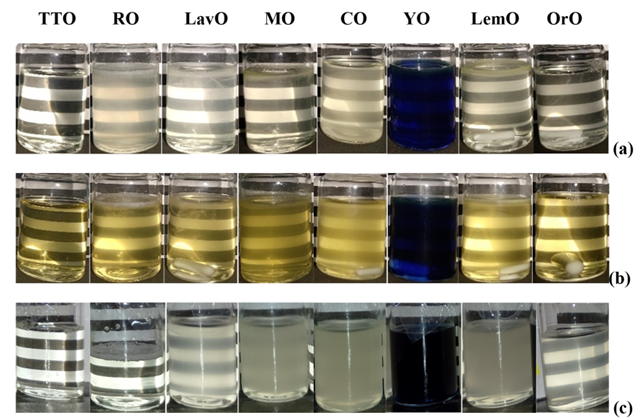
Essential oils are a key ingredient in foods, beverages, and personal- and home-care products due to their flavors, scents, and various biological activities. This study investigates the capacity of polysorbate 60 (PS60) micelles to solubilize eight essential oils classified into two groups based on their composition. The first group (tea tree, rose, lavender, and melissa oils) contains more than 40% polar aliphatic or alicyclic alcohols or aldehydes, whereas the oils from the second group (chamomile, yarrow, lemon, and orange oils) contain less than 20% of these compounds. The efficient solubilization of the studied essential oils within PS60 micelles is proposed to occur via a mechanism involving two steps: (1) the formation of mixed micelles between PS60 molecules and the polar alcohol or aldehyde constituents of the essential oils, and (2) the dehydration of PS60 ethoxy groups in the presence of highly water-soluble additives (such as citric acid and sodium citrate), which is suggested to decrease the hydrophilic barrier of the micellar corona, thereby facilitating the mass transfer of hydrophobic oil molecules into the micellar core. Stable, transparent microemulsions form only with the first group of essential oils in a certain concentration range. The second step in the proposed mechanism leads to the unexpected finding that reducing the concentration of water-soluble additives, such as citric acid and sodium citrate, impairs solubilization by allowing the micellar corona to rehydrate.